
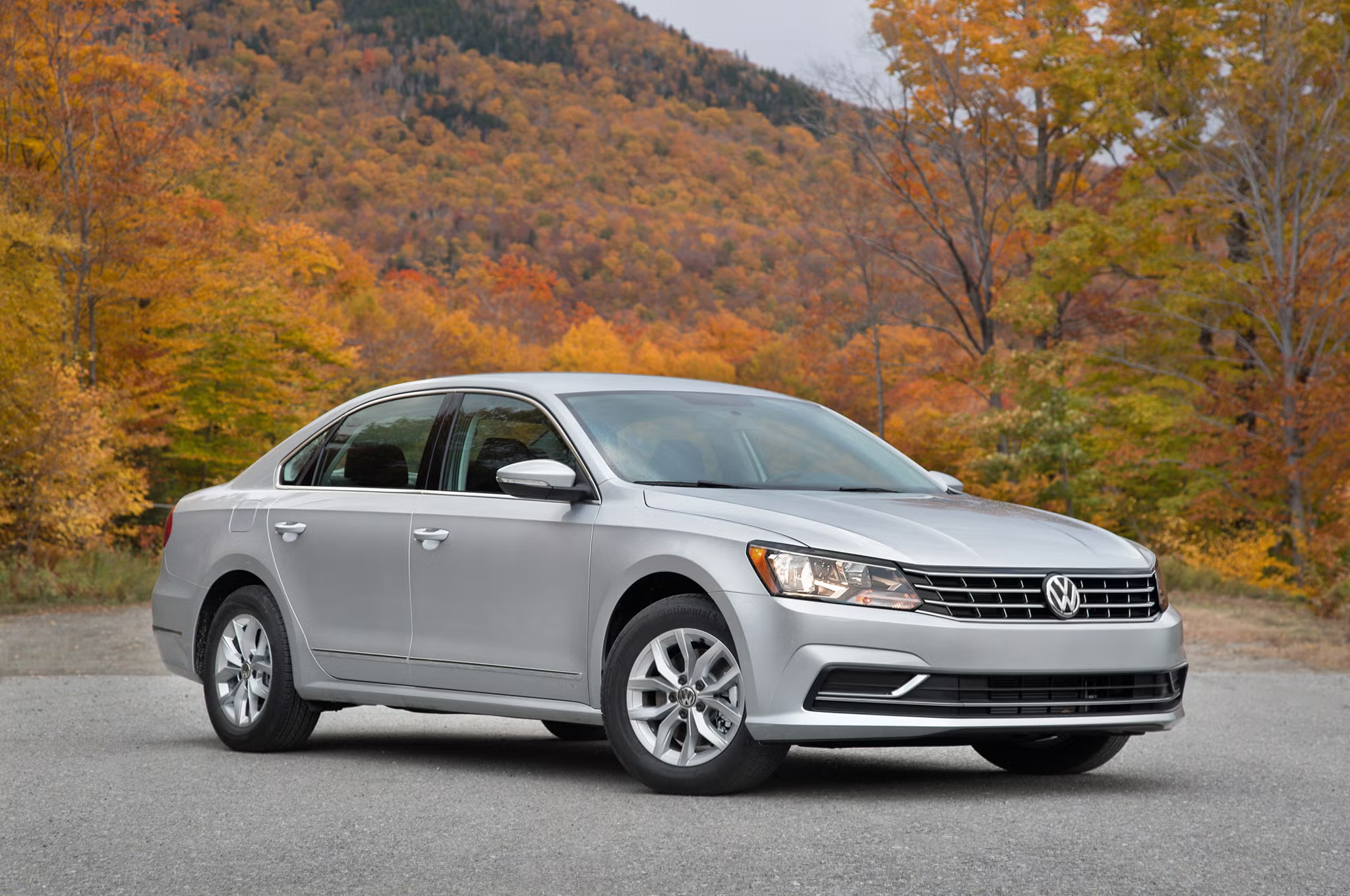
Unofficial specifications
Digital Instrument ClusterYes | Drive ModesNormal, Sport |
Driver Seat AdjustmentPower Adjustable | Push Button StartYes |
RAM Slots4 | ESCYes |
Ventilated SeatsYes | Android AutoYes |
Ambient LightingYes | Traction ControlYes |
Engine Warranty (Years)5 | Ex-Showroom Price (USD)35000 |
Sound System BrandDynaudio | ISOFIX MountsYes |
Connected Car FeaturesYes | BrandVolkswagen |
Blind Spot MonitorYes | Lane Keep AssistYes |
OTA UpdatesYes | Valves Per Cylinder4 |
Steering TypeElectric Power Steering | Roof RailsNo |
Infotainment Screen (inch)8 inches | Heads Up DisplayNo |
Engine ConfigurationInline | RAM Expandable1984 |
Battery Capacity (kWh)16 km/L | Adaptive Cruise ControlYes |
Model NameVolkswagen Passat | Mileage Highway (km/L)18 km/L |
Steering AdjustmentTilt and Telescopic | Spare Wheel TypeFull-size |
Processor Threads16.0:1 | RAM SpeedDOHC |
ORVM TypeElectrically Adjustable | Apple CarPlayYes |
Number of Speakers10 | Vehicle Warranty (Years)3 |
Sunroof TypePanoramic | EBDYes |
Hill HoldYes | Automatic Emergency BrakingYes |
Differential TypeOpen | DRLYes |
Camera TypeReversing Camera | Keyless EntryYes |
Wheel Size (inch)17 | Battery Warranty (Years)Electric |
Processor CoresElectronic | Dimensions4774 x 1832 x 1456 mm |
Acceleration 0-100 km/h8.5 seconds | ABS (Anti-lock Braking System)Yes |
Airbags6 | Air ConditioningAutomatic Climate Control |
Bluetooth ConnectivityYes | Body TypeSedan |
Boot Space586 liters | Brake TypeDisc |
Climate ControlDual-zone | Clutch TypeManual |
Cooling SystemLiquid | Cruise ControlAdaptive Cruise Control |
Displacement1984 cc | Drive TypeFront Wheel Drive |
Emission StandardEuro 6 | Engine TypeInline-4 |
Fuel Capacity60 liters | Fuel SystemDirect Injection |
Fuel Tank Capacity60 liters | Fuel TypePetrol |
Gearbox7-speed DSG | Ground Clearance150 mm |
Headlight TypeLED | Horsepower150 HP |
Ignition TypeElectronic | Infotainment SystemVolkswagen Discover Media |
Kerb Weight1490 kg | Length4774 mm |
Max Power150 HP | Max Torque250 Nm |
Mileage15 km/L | Number of Cylinders4 |
Number of Gears7 | Number of Seats5 |
Parking SensorsFront and Rear | Power SteeringYes |
Rear CameraYes | Seating Capacity5 |
Starting SystemPush Button Start | Suspension TypeIndependent MacPherson |
Top Speed210 km/h | TouchscreenYes |
TransmissionAutomatic | Tyre Size215/55 R17 |
Tyre TypeAll-Season | Valve ConfigurationDOHC |
Valve Per Cylinder4 | Wheelbase2791 mm |
Width1832 mm | ColorDeep Black Pearl |
Compression Ratio9.6:1 | CEO / MD Name |
VariantHighline | Generation8th |
SegmentD-Segment | Launch Year2023 |
Engine AspirationTurbocharged | Power to Weight (HP/ton)100.67 HP/ton |
Mileage City (km/L)12 km/L | Mileage Combined (km/L)15 km/L |
Motor Power (kW) | Motor Torque (Nm) |
Charging Type | Front SuspensionMacPherson Strut |
Rear SuspensionMulti-link | Fog Lamp TypeLED |
Alloy WheelsYes | Wiper TypeIntermittent |
Reviewer
Mar 17, 2026
Urban Commuter Rating: 3.5/5 | City Practicality Score: 3.2/5
The Volkswagen Passat delivers a real-world city fuel economy of around 8.5 litres/100km, which is higher than its WLTP urban figure of 7.3 litres/100km. In stop-go traffic, the fuel consumption rises due to frequent idling and acceleration. On an average city mileage of 15,000 km annually, expect to spend significantly more on fuel than advertised, unless you can benefit from the auto stop/start system which, though helpful, is not always active during a dense commute.
With a turning circle diameter of 11.7 metres, the Passat is not the most agile in tight urban settings, especially compared to smaller city cars. Its length of 4.77 metres and width of 1.83 metres require careful navigation through narrow streets and tight parking spaces. Parallel parking demands skill due to its size, though the steering lock provides good feedback, making it easier to adjust in cramped car parks.
The Passat’s A-pillars can create noticeable blind spots at junctions, which could be problematic in busy urban environments. Rear visibility is somewhat restricted due to the car's shape, but parking sensors at both ends and a high-resolution rearview camera provide substantial assistance. The wide-angle lens is effective for spotting obstacles, and the optional automatic parking assist system is a boon for those who find city parking stressful.
The Passat's DSG automatic transmission is generally smooth in stop-go traffic, with the clutch feel not being a concern for drivers used to automatics. However, the ride can feel somewhat firm over speed humps and potholes, typical of urban roads. The seats offer good support for prolonged periods of idling, though cabin noise can be intrusive when surrounded by loud city traffic.
The Passat excels with its Apple CarPlay and Android Auto capabilities, providing seamless integration with smartphones for real-time traffic updates and rerouting via Google Maps or Waze. Over-the-air map updates are convenient, and the infotainment system offers easy-to-use controls, minimizing distractions while driving in traffic.
The boot offers a generous capacity of 586 litres, easily accommodating daily shopping bags. Loading and unloading are straightforward, even in tight street parking. Although the rear seats fold down to increase space, the car's size might limit its ease of use for some urban dwellers when dealing with bulky items.
The Passat falls into a mid-range city insurance group, balancing costs against benefits. It is compliant with ULEZ standards, which saves on congestion charges in urban areas. The road tax is reasonable, and residential parking permits fall in a moderate band. However, city driving can lead to increased tyre wear, which should be factored into ongoing costs.
The Volkswagen Passat offers a few genuine advantages for urban commuters. Its tech-savvy infotainment system, effective parking aids, and reasonable fuel economy are notable strengths. The spacious boot is also a plus for those needing to carry more than just the basics daily.
Despite its strengths, the Passat has some drawbacks in city settings. The visibility issues from the A-pillars, coupled with a firm ride over rough roads, can be frustrating. Its larger size limits maneuverability in tight spaces, and the somewhat complex infotainment system requires attention that could otherwise be focused on driving.
For those seeking alternatives, cars like the Ford Focus and Honda Civic offer better urban fuel economy and maneuverability. These models boast smaller footprints and superior parking aids, making them more suited to the demands of city life while remaining competitively priced.
The Volkswagen Passat is a competent city car for those who prioritize comfort and technology, but its size and visibility issues may deter some urban drivers. While it offers decent fuel economy and connectivity features, rivals with better maneuverability and lower running costs might be more appealing for the daily urban grind.
Share feedback or ask a question about this product.